Blind Ambition Framework™: 5 Steps. 200+ Events. 40% YoY Revenue Growth After One Keynote.
- The keynote behind the 40% growth. Now available for your event
- Harvard-educated. Built tech Oracle called impossible. $45B Strategies
- Forged in fire: 5 Pillars to transform how teams perform under pressure
Book the keynote speaker who proves "impossible" is just someone else's limit.
Inquire About Speaking




- 200+ Keynotes
- 175K+ Attendees
- 6 Continents
High Performance When the Path Isn’t Clear
Blind Ambition Framework™: 5 Steps. 200+ Events. 40% YoY Revenue Growth After One Keynote.
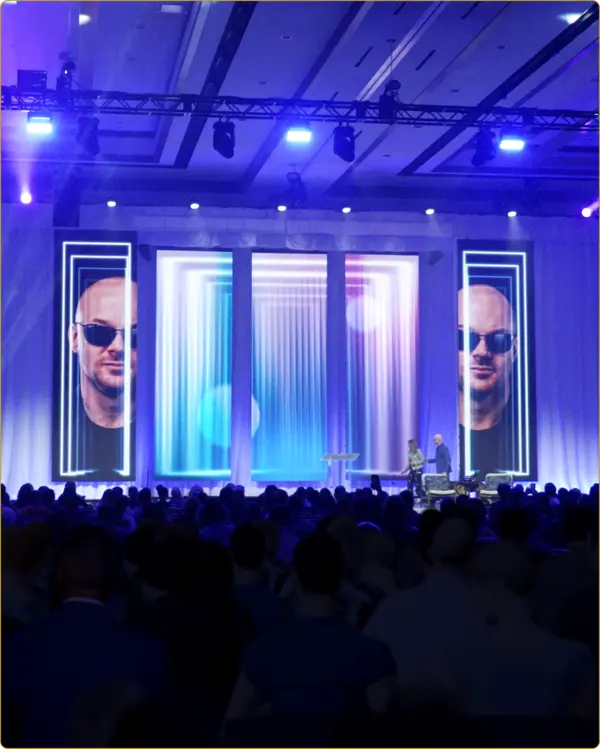
This is the keynote that produced 40% YoY revenue growth for a sales team, and the CRO called it “unlike anything we’ve seen from a guest speaker.” It’s been delivered 200+ times to 175,000+ attendees across 6 continents for organizations including Google, Salesforce, Fidelity, and IBM.
The Blind Ambition Framework™ is a structured 5-step business methodology built after going blind at 21 and generating $45 billion in technology deals at IBM and Red Hat. Your audience gets the full framework, delivered through storytelling that captures attention, humor that builds connection, and tools they apply on Monday morning.
Why This Keynote Is Different
Most keynotes give your audience an experience. This one gives them an operating system.
I didn’t build the Blind Ambition Framework in a classroom or a consulting firm. I built it after losing my eyesight at 21, then using it to generate $45 billion in technology deals, build software Oracle said was impossible, and become the first blind executive to graduate Harvard Business School’s leadership program. I ski black diamonds. I train Brazilian Jiu-Jitsu. I negotiate billion-dollar deals. All without eyesight.
I’m not successful despite being blind. I’m successful because going blind forced me to build a system for performing without the operating conditions everyone else takes for granted. That system is the Blind Ambition Framework - and your team gets the same 5 steps I use every day.
The difference between this keynote and every other speaker on your shortlist is simple: your audience doesn’t just leave inspired. They leave with a structured methodology they can apply to their specific challenge - whether that’s sales performance, leadership development, change management, or AI transformation. The framework is the product. The story is the proof. The outcome is measurable.
After one delivery, a CRO reported 40% YoY revenue growth. After another, an event planner said 4,000 people sat in pin-drop silence. After another, an ADP executive reported that at least 10 people told them it was the best presentation they’d ever seen, including their boss.
That’s not motivation. That’s methodology.
The 5 Pillars of the Blind Ambition Framework™
Every keynote delivers the full 5-pillar system. Each pillar is backed by research, illustrated with real-world application from my career and from organizations I’ve worked with, and designed for your audience to implement immediately.
01 PILLAR 1: OWN YOUR RESPONSE
The gap between what happens to you and how you respond is the space where performance is determined. Most teams react to disruption instinctively, defaulting to fear, blame, or paralysis. This pillar provides a structured method for converting reactive instincts into strategic responses.
When I lost my eyesight at 21, the instinctive response was grief. The strategic response was: “What can I build with the information this experience gives me?” That question led to Harvard Business School, $45 billion in technology deals, and a framework now used by Fortune 500 companies.
Research context: Studies in cognitive behavioral science demonstrate that the ability to create space between stimulus and response is the single highest-leverage skill for performance under pressure.
02 PILLAR 2: TELL YOURSELF THE RIGHT STORIES
Every team carries narratives about their circumstances that either limit or accelerate performance. These stories feel like facts. They’re not. They’re interpretations, and they’re the invisible ceiling on your team’s performance.
When I went blind, I chose a different narrative: “I have information that sighted people don’t. Let me use it.” That narrative led to a career that most sighted executives never achieve, not because I ignored reality, but because I chose a story that propelled action instead of justifying inaction.
Research context: Narrative psychology research shows that the stories individuals tell themselves about their circumstances are more predictive of performance outcomes than the circumstances themselves.
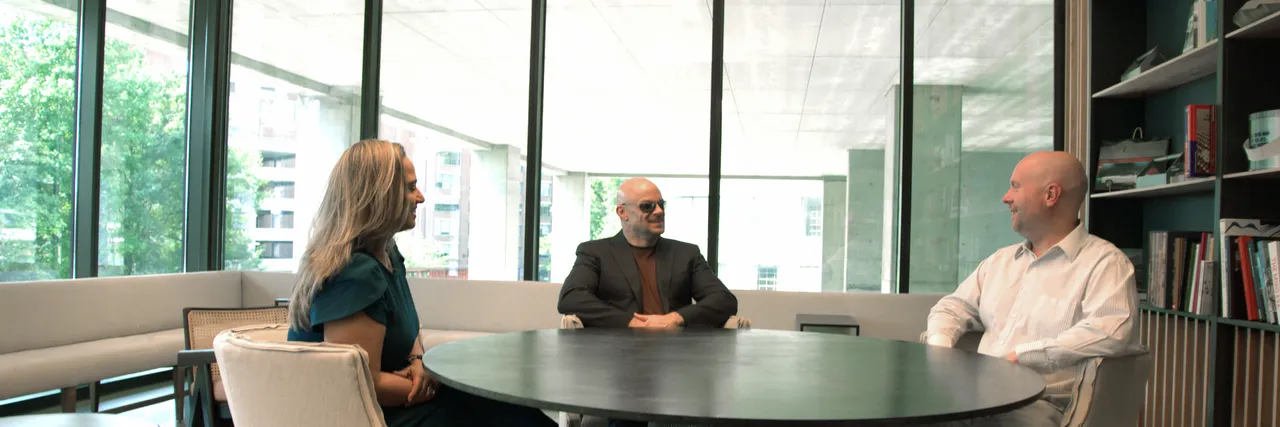
03 PILLAR 3: VISUALIZE YOUR GREATNESS
Performance follows vision, not vague aspiration, but specific, detailed visualization of what breakthrough looks like for you and your team.
When I went blind, I lost the ability to see the world around me. But I gained a discipline most people never develop: building vision internally. I had to visualize every negotiation before it happened: the flow of the conversation, the objections, the decision points, because I couldn’t read the room in real time. That practice of deliberate visualization became the foundation for $45 billion in enterprise deals. I didn’t achieve those outcomes and then visualize them. I visualized them and then built toward them.
Research context: Visualization research across performance psychology and neuroscience demonstrates that detailed mental rehearsal activates the same neural pathways as physical practice.
04 PILLAR 4: DON'T LET COMFORT KILL YOUR GROWTH
This is the pillar that connects directly to the Comfort Kills™ thesis, the idea that comfort, not adversity, is the greatest threat to performance.
Most people assume my relationship with discomfort started when I went blind at 21. That was the most dramatic chapter, losing everything familiar and rebuilding from zero. But the conditioning started much earlier.
I grew up with night blindness, learning the limitations of my eyesight as a child. The physical discomfort of colliding with things I couldn’t see. The social discomfort of not driving when every friend could. The emotional discomfort of being different in ways I couldn’t explain. Then at 21, the background discomfort became the entire operating environment, and every comfort was eliminated.
But here’s what a lifetime of that conditioning produced: a person who is wired to seek discomfort, not avoid it. I learned to downhill ski at 38. I started training Brazilian Jiu-Jitsu at nearly 46. I reinvented my career at every turn. Not because I’m fearless, but because decades of discomfort conditioned me to recognize that the most productive thing I could do was move toward the hard thing, not away from it.
Research context: Research on deliberate practice shows that performance improvement occurs at the edge of current ability, the zone of productive discomfort.
05 PILLAR 5: TAKE ADVANTAGE OF YOUR DISADVANTAGES
Every team and every individual has disadvantages. The question isn’t whether you have them. The question is whether you’re using them.
Going blind was the ultimate disadvantage. But it gave me capabilities I never would have developed with sight. I listen more carefully than anyone in the room because I can’t read the body language, so I hear what people actually mean, not just what they say. I prepare more thoroughly than any competitor because I can’t wing it: every deal, every presentation, every negotiation is planned at a level of detail that sighted executives rarely match.
I built software without seeing the screen, which forced me to think about architecture at a level of abstraction that produced solutions Oracle said were impossible. The software skills my blindness forced me to build became the foundation for managing multi-billion-dollar technology deals. I became so proficient at managing our spreadsheet system, I automated a great deal of our work using custom-written Visual Basic code that saved countless hours for our entire global department. And, I was a better business professional because I understood our technology solutions at a depth that sighted executives never needed to develop.
None of those capabilities would exist if I had kept my sight. The disadvantage became the competitive advantage.
Research context: The concept of “constraint-driven innovation” is well-documented in organizational research. Teams operating under constraints consistently produce more creative solutions than teams with unlimited resources.
What Your Audience Gets
-
Sales
For Sales Teams
Your reps stop selling with excuses and start selling with the framework. The same methodology that produced 40% YoY revenue growth gives your sales team a system for performing through tough quotas, shifting markets, and competitive pressure. They'll leave with tools to own their pipeline, reframe rejection as data, and close when conditions aren't ideal.
-
Leadership
For Leadership Teams
Your leaders stop reacting and start operating with a system. The framework gives them a structured approach to decision-making under uncertainty, communication during disruption, and building teams that perform when the old playbook no longer applies.
-
Change
For Change Champions
Your change agents get a methodology, not a motivational moment. The framework gives teams navigating restructuring, technology shifts, mergers, or market disruption a structured system for moving before clarity arrives.
-
Corporate
For General Corporate Audiences
Your audience gets an unforgettable experience built on a structured methodology. The 5 pillars apply universally, whether your attendees are in sales, operations, HR, finance, or the C-suite. Every person in the room walks away with the same framework and a different relationship with the challenges they face on Monday morning.
Event Planner Details
Format and Duration:
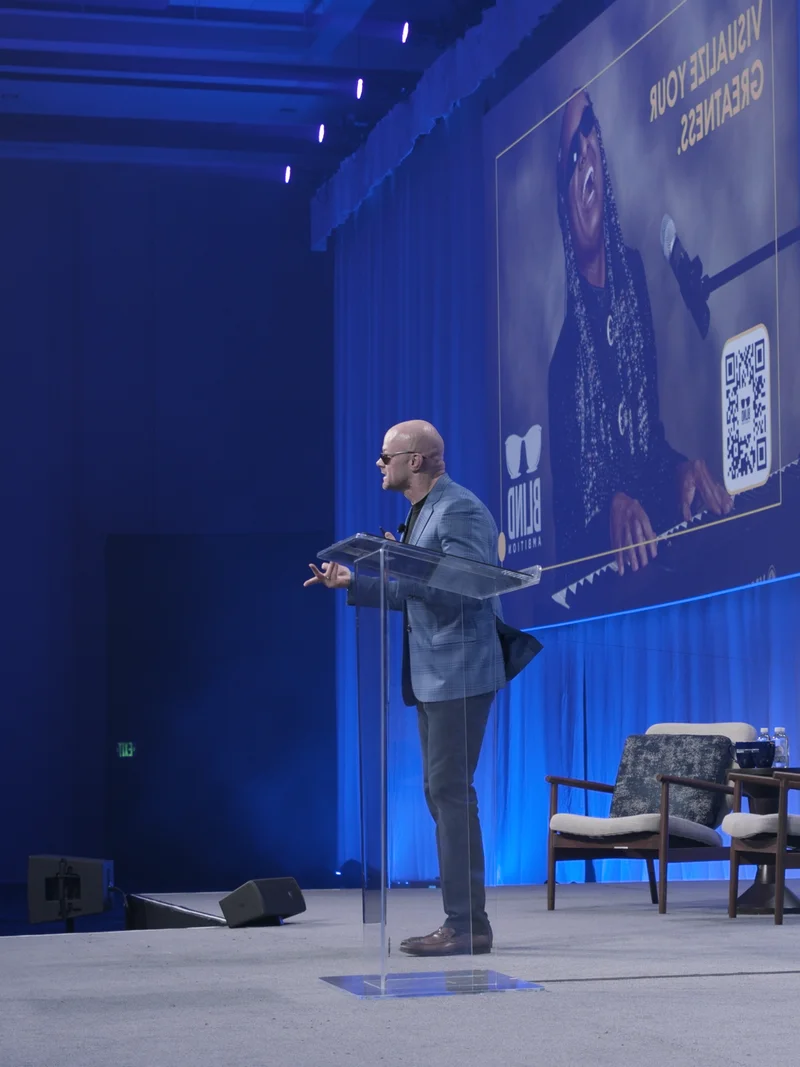
The Blind Ambition™ keynote is delivered in 45 to 90 minutes, customized to your event schedule. The format includes the full 5-pillar framework, Chad’s personal narrative as the proof of each pillar, audience interaction, and a closing that drives action. Live Q&A can be added as a 15-30 minute extension. Virtual and hybrid delivery options are available.
CUSTOMIZATION:
Every delivery is customized. Chad works directly with your team in advance to align the framework’s application to your industry, conference theme, audience demographics, and specific business challenges. He has customized this keynote for healthcare, finance, technology, retail, logistics, automotive, education, associations, and more.
AUDIENCE SIZE:
50 to 5,000+. The keynote has been delivered in intimate boardroom settings and in auditoriums of 5,000+ with equal impact.
WHAT’S INCLUDED:
- Customized keynote delivery (45-90 minutes)
- Pre-event consultation to align content to your objectives
- A/V and stage requirements provided in advance
- Event toolkit: introduction script, professional photos, bio, keynote slides, closing video
- Post-program evaluation form for measuring impact
- Optional: LeaderPass Behavior Change Program (30+ lessons, 1 year access) as post-event reinforcement
LOGISTICS:
Chad travels from Atlanta, GA. Domestic and international engagements accepted. Contact Brandy Gibson at Executive Speakers Bureau at 855-GET-CHAD (855-438-2423) for availability, pricing, and travel requirements.
Maximize Impact - Pair With an Intensive or Course
The Blind Ambition™ keynote creates the moment. These additions make it last.
PAIR WITH: UNCERTAIN ADVANTAGE™ STRATEGIC ACTIVATION INTENSIVE
Book the keynote for your general session and the Strategic Activation Intensive for your leadership team to follow. The keynote delivers the framework and the energy to 5,000+ attendees. The Intensive embeds the framework through interactive exercises and worksheets with your leadership cohort. This is the standard engagement for organizations serious about behavior change, and the combination organizations come back for.
Learn more about the Strategic Activation Intensive
PAIR WITH: LEADERPASS BEHAVIOR CHANGE PROGRAM
The keynote ends on Friday. By Wednesday, old patterns can start returning. LeaderPass solves this with 30+ video lessons, workbooks, and practical exercises your team accesses for a full year after the event.
PAIR WITH: COMFORT KILLS™ KEYNOTE
For multi-day events, book Blind Ambition™ as the opening keynote and Comfort Kills™ as the closing keynote. The first delivers the full framework. The second applies it to the specific challenge of organizational complacency.
Keynote Topics - Customized for Every Audience
The Blind Ambition Framework™ is the constant. The application is customized to your audience's specific challenge.
- Learn more about the Sales Keynote
- Learn more about the Leadership Keynote
- Learn more about the Change Management Keynote
- Learn more about the AI Keynote
- Learn more about the Adversity Keynote
- Learn more about the Diversity Keynote
What Happens After This Keynote
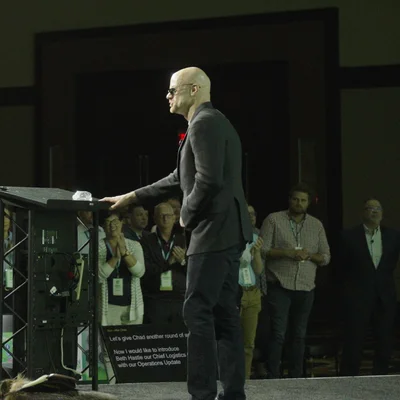
Chad was phenomenal - he exceeded every expectation. The feedback was overwhelmingly positive… the highlight of the event… “hands down, the absolute best speaker I have ever been privileged to hear.” Universally impactful and incredibly timely given the uncertainty and constant change we’re facing with technology and the pressure for performance and growth… weaving in just enough industry language and context to make his keynote deeply relevant. Charismatic, personable, funny, passionate, and approachable, his message was referenced repeatedly throughout other presentations, and he had a long line… which he graciously accommodated.
At least 10 people came up to me and said [he was] the best they have ever seen present, including my boss. An absolutely incredible session. [He was] engaging, [he was] informative, [he was] powerful, and [he was] funny! I continue to hear great feedback from across the world! It resonated and was applicable to everyone.
…from Dubai, Milan, and Madrid to Paris, São Paulo, and NYC…Chad’s impact is universally profound…teaching how to turn obstacles into advantages and how to really lead…He left our audiences energized…an absolute joy to work with… I cannot recommend Chad and Major highly enough to any organization looking to create a truly unforgettable experience that will last a lifetime.
Chad’s presentation was unique, interesting, emotional, and, dare I say, spellbinding. In an auditorium of over 4,000 people, we could have heard a pin drop. The way Chad laid out his story kept the audience engaged until the last word. Not only did Chad make us look good, but he was attentive prior to the meeting to assure he was “on point,” great to work with the day of the event, and gracious with his time after his presentation. Chad was an absolute home run for our Annual Meeting. I would not hesitate to recommend Chad Foster to any organization looking for something different and special.
The highlight of the Sales Kick Off … was Chad’s inspirational talk. I have eyes but lack [his] vision…. [He is] indeed a visionary.
[He] knocked it out of the park! The messaging, linking it to our mission statements…everything was spot on! It was truly a moving experience for all who had the pleasure of seeing [him] speak. Could not have been more happy with the choice we made. That evening I had 20+ people come up to me and tell me how much they were impacted by [Chad’s] words. [He has] a gift and I appreciate [him] sharing it with us all!
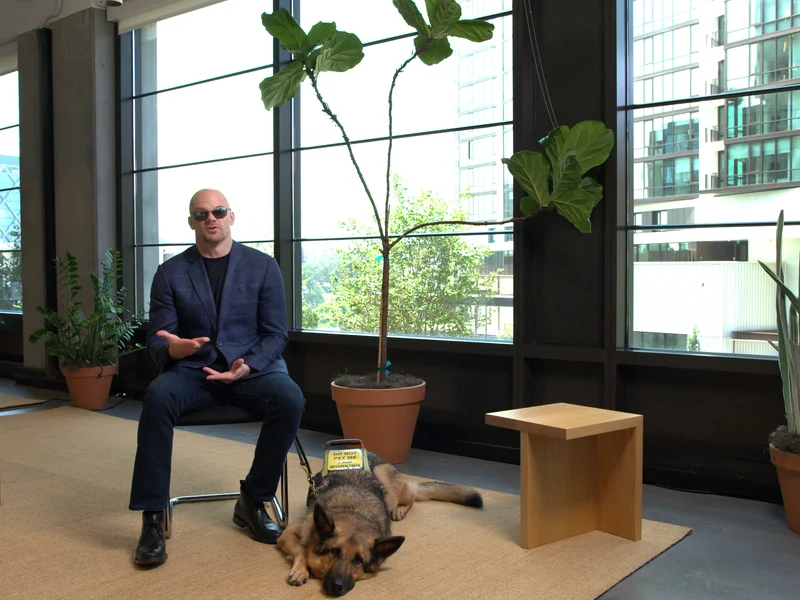
About Chad E. Foster
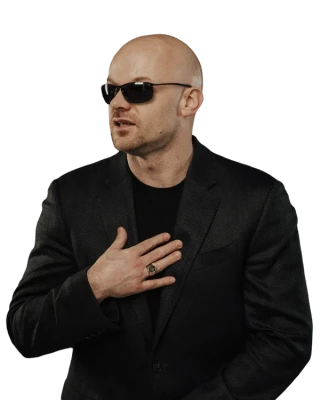
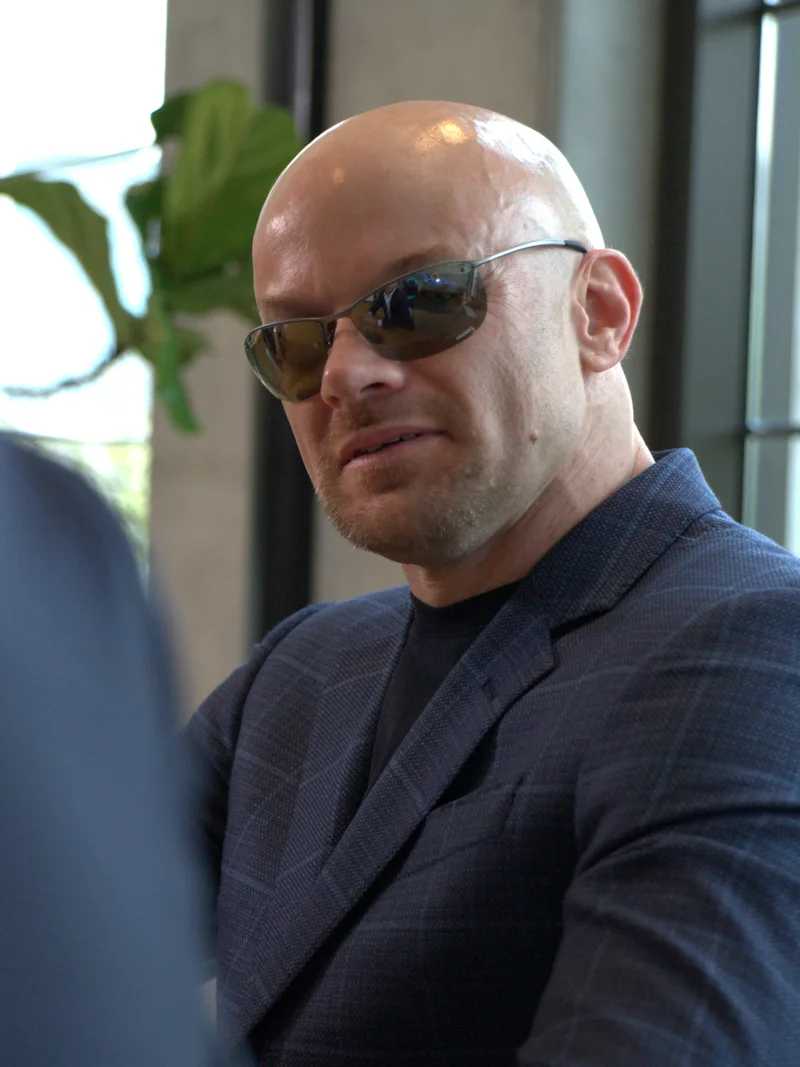
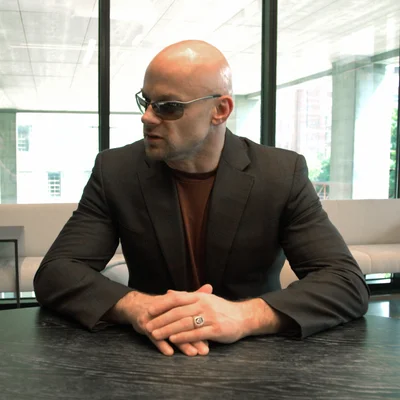
Chad E. Foster is the creator of the Blind Ambition Framework™ - a 5-step business methodology that has been delivered 200+ times to 175,000+ attendees across 6 continents. After going blind at 21, Chad graduated from Harvard Business School’s leadership program, generated $45 billion in technology deals, and built software Oracle said was impossible. He has shared the stage with Adam Grant and Daymond John, and his life story was commissioned as an opera by the Atlanta Opera.
The framework is delivered through keynotes, Strategic Activation Intensives, and the LeaderPass Behavior Change Program, a 30+ lesson digital course for sustained post-event impact.
Chad is the author of Blind Ambition, published by HarperCollins Leadership.
Frequently Asked Questions About the Blind Ambition™ Keynote
01 How long is the Blind Ambition™ keynote?
The standard format is 45 to 90 minutes, customized to your event schedule. Live Q&A can be added as a 15-30 minute extension. The full 5-pillar framework is delivered regardless of session length.
02 Can the keynote be customized for our specific industry or conference theme?
Every delivery is customized. Chad works with your team before the event to align the framework’s application to your industry, conference theme, and audience objectives.
03 What's the difference between the Blind Ambition™ keynote and the other programs?
Blind Ambition™ is the flagship keynote, the full 5-pillar framework delivered as a high-impact general session for audiences of 50 to 5,000+. The Diversity program delivers its own dedicated 5-pillar framework for the DEI context. Comfort Kills™ applies the framework to organizational complacency. The Uncertain Advantage™ Strategic Activation Intensive is an interactive format that embeds the framework through exercises, requiring a preceding keynote delivery.
04 Can Chad speak virtually?
Yes. Virtual and hybrid options are available. The framework translates to virtual delivery because the methodology is the deliverable, not the stage presence.
05 What is the LeaderPass Behavior Change Program?
LeaderPass is a 30+ lesson digital course that reinforces the framework after the event. Available as an add-on to any keynote, with enterprise licensing for teams of 10 to 1,000+.
06 How do I book this keynote?
Contact Brandy Gibson at Executive Speakers Bureau at 855-GET-CHAD (855-438-2423) or submit your event details using the inquiry form on this page.
Ready to Book This Keynote?
200+ events. 175,000+ attendees. 6 continents. Zero regrets.
Call 855-GET-CHAD or submit your event details below.
Not sure if Blind Ambition™ is the right program?
Blind Ambition™
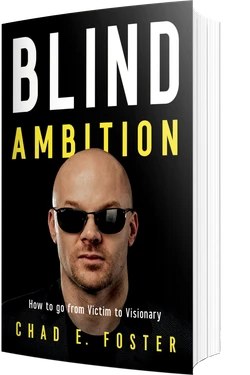
The Book Behind the Framework
The methodology behind 200+ keynotes and 40% YoY revenue growth started here. Blind Ambition is the story of how Chad E. Foster lost his eyesight at 21 and built a framework that Fortune 500 companies now use to drive performance under pressure. Part origin story, part business methodology, part field guide for anyone who refuses to let circumstances dictate outcomes.