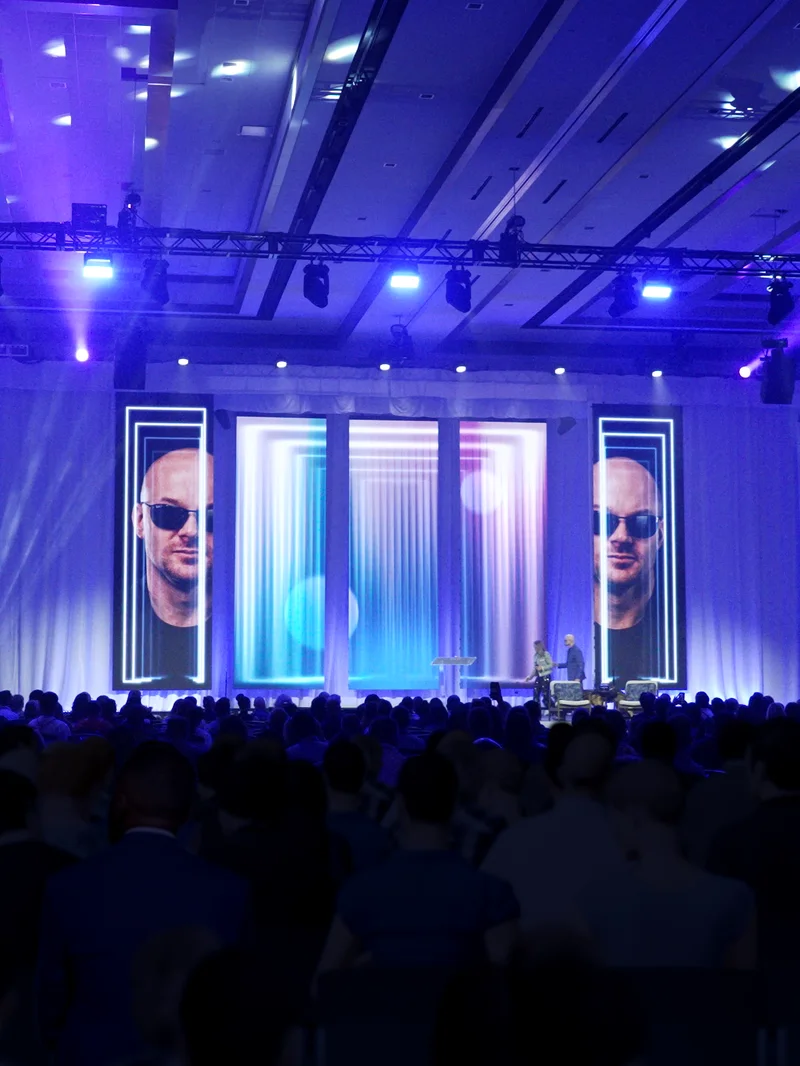
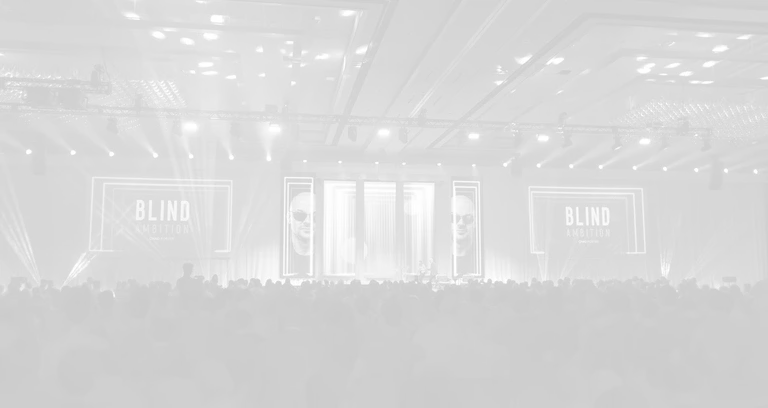
Chad E. Foster speaking at a conference

A 5-Step Business Methodology for Building Breakthrough Performance Under Pressure.

  • The methodology behind 40% YoY revenue growth
  • Harvard-educated. Built tech Oracle called impossible. $45B Strategies
  • Forged in fire: 5 Pillars to transform how teams perform under pressure

Book the keynote speaker who proves "impossible" is just someone else's limit.

Inquire About Speaking
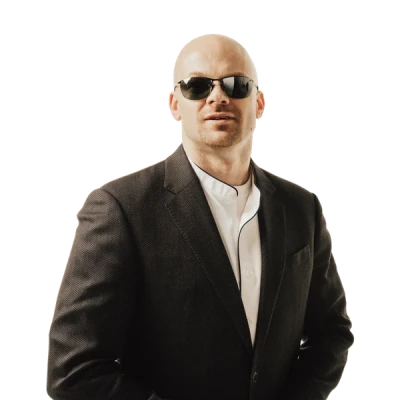
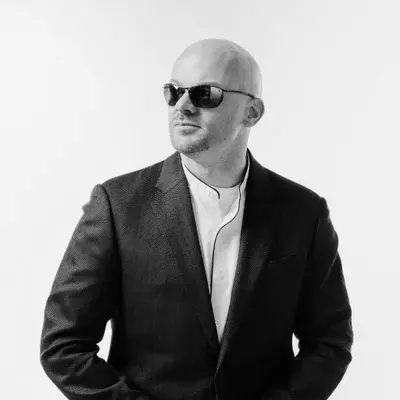
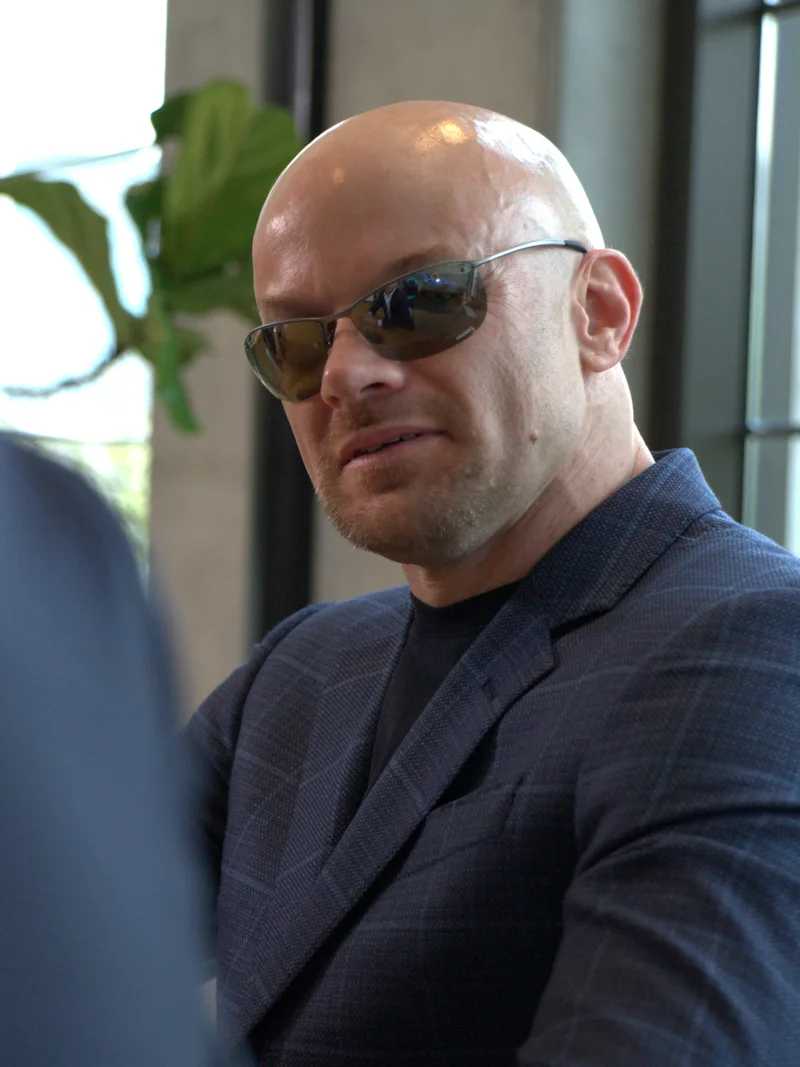
Chad Foster portrait
  • Google
  • Caterpillar
  • Nestle-Purina
  • BCBS
  • IBM
  • 200+ Keynotes
  • 175K+ Attendees
  • 6 Continents

Chad was phenomenal - he exceeded every expectation… universally impactful and the highlight of the event… “the absolute best speaker I have ever been privileged to hear.”

Caterpillar logo

The Blind Ambition Framework™

A 5-Step Business Methodology for Building Breakthrough Performance Under Pressure.

The Blind Ambition Framework is a 5-step business methodology created by Chad E. Foster that transforms how teams perform under pressure. Developed from Foster’s experience of going blind at 21 and subsequently generating $45 billion in technology deals, the framework provides a structured, repeatable system for building resilience, driving accountability, and creating competitive advantage during disruption.

It is delivered through keynote presentations, facilitated executive intensives, and a 30+ lesson digital course, and has been applied at organizations including Google, Salesforce, Caterpillar, Nestle-Purina, and IBM. After one keynote built on this framework, a CRO reported 40% YoY revenue growth.

Chad E. Foster delivering the Blind Ambition Framework on stage

What Is the Blind Ambition Framework™?

The Blind Ambition Framework is a structured, 5-step business methodology designed to transform how teams perform under conditions of pressure, disruption, and uncertainty.

It was created by Chad E. Foster - a Harvard Business School graduate, $45 billion enterprise dealmaker, and the builder of software that Oracle said was impossible. Foster developed the framework after losing his eyesight at 21, an experience that forced him to rebuild every system he relied on with zero visibility into what would work. The methodology that emerged from that process has since been applied at more than 200 events across 6 continents for organizations including Google, Salesforce, Caterpillar, Amgen, Fidelity, IBM, Kellogg’s, Trane, and Blue Cross Blue Shield.

The framework is not motivational speaking. It is a structured system with five named pillars, each backed by research and proven through application at the highest levels of enterprise business. Teams that apply the framework don’t just feel inspired. They operate differently—making decisions under pressure, performing through disruption, and building the adaptive capacity that produces measurable business outcomes.

After one keynote built on this framework, a client’s sales team reported 40% year-over-year revenue growth. The CRO called it “unlike anything we’ve seen from a guest speaker at a sales conference.”

The framework is delivered through five programs across two engagement formats — keynote presentations and facilitated executive intensives — plus the LeaderPass Behavior Change Program for sustained reinforcement.

Keynote programs (45–90 minutes for audiences of 50 to 5,000+): • Blind Ambition™ — the flagship keynote • Comfort Kills™ — the innovation and adaptability keynote • Diversity — the diversity-of-thought keynote with its own 5-pillar framework

Executive facilitation programs (for executive leadership cohorts of 20 to 200): • Kill the Comfort™ Strategic Facilitation Exercise — surfaces blind spots and builds leadership alignment around what must change. Facilitated session, length tailored to event goals (as short as 45 minutes). • Uncertain Advantage™ Strategic Activation Intensive — applies the framework pillars to a specific organizational challenge through facilitated executive practice. Facilitated session, length tailored to event goals (as short as 45 minutes).

LeaderPass Behavior Change Program — a 30+ lesson digital course aligned to the Blind Ambition Framework™ pillars, included with Uncertain Advantage™ and available as an add-on for the other four programs.

How the Framework Is Delivered — The Transformation Arc

The Blind Ambition Framework™ is delivered as five programs, but for organizations driving enterprise-wide change, three of those programs sequence into a single transformation arc.

Stage 1: Blind Ambition™ Keynote. Delivers the framework. Establishes shared language across the broader organization. Creates the moment.

Stage 2: Kill the Comfort™ Strategic Facilitation Exercise. Surfaces the friction. Identifies blind spots. Builds leadership alignment around the strategic shifts required for future-state performance.

Stage 3: Uncertain Advantage™ Strategic Activation Intensive. Applies the framework pillars to the challenges surfaced in Stage 2 through facilitated executive practice. Installs the operating system for performing when the path isn’t clear.

The Blind Ambition™ keynote is the required prerequisite for Stages 2 and 3. Stage 2 is recommended but not required before Stage 3 — organizations with a clearly defined strategic challenge can move directly from the keynote to Uncertain Advantage. Organizations less certain of what their team needs to confront book the full three-stage arc.

The two remaining programs — Comfort Kills™ (a standalone keynote on the anti-complacency thesis) and Diversity (a standalone keynote with its own 5-pillar diversity framework) — sit outside the transformation arc. They are independent keynotes for organizations whose primary need is a specific topical session rather than a sequenced engagement.

Comfort Kills™ vs. Kill the Comfort™ — Two Different Programs

Comfort Kills™ is a keynote. It delivers the anti-complacency business thesis to broad audiences (50 to 5,000+) in a 45–90 minute session. It is the keynote that opens conversations about why comfort is the greater threat to growth than adversity.

Kill the Comfort™ is a strategic facilitation exercise. It is a facilitated session for executive leadership cohorts (20 to 200) — length tailored to event goals, as short as 45 minutes — that surfaces organizational blind spots and builds alignment around what must change. It is the executive facilitation that operationalizes the Comfort Kills thesis at the leadership-team level.

The names rhyme. The products don’t overlap.

The 5 Pillars of the Blind Ambition Framework™

01 Own Your Response

The gap between what happens to you and how you respond is the space where performance is determined. Most teams react to disruption instinctively—defaulting to fear, blame, or paralysis. This pillar provides a structured method for converting reactive instincts into strategic responses.

When I lost my eyesight at 21, the instinctive response was grief. The strategic response was: “What can I build with the information this experience gives me?” That question led to Harvard Business School, $45 billion in technology deals, and a framework now used by Fortune 500 companies. Your team faces disruption daily—market shifts, competitive pressure, and organizational change. This pillar gives them the method for choosing the response that produces results, not the one that feels natural.

Research context: Studies in cognitive behavioral science demonstrate that the ability to create space between stimulus and response is the single highest-leverage skill for performance under pressure. This pillar operationalizes that principle for business teams.

02 Tell Yourself the Right Stories

Every team carries narratives about their circumstances that either limit or accelerate performance. “We can’t compete with their budget.” “Our market is too saturated.” “We don’t have the right people.” These stories feel like facts. They’re not. They’re interpretations—and they’re the invisible ceiling on your team’s performance.

When I went blind, the available stories were: “Your career is over.” “You’ll need to lower your expectations.” “The world isn’t built for you.” I chose a different narrative: “I have information that sighted people don’t. Let me use it.” That narrative led to a career that most sighted executives never achieve—not because I ignored reality, but because I chose a story that propelled action instead of justifying inaction.

This pillar gives your team a structured method for identifying the narratives they’re carrying, evaluating whether those narratives are serving or limiting them, and rewriting the ones that are holding them back.

Research context: Narrative psychology research shows that the stories individuals tell themselves about their circumstances are more predictive of performance outcomes than the circumstances themselves.

03 Visualize Your Greatness

Performance follows vision. Not vague aspiration—specific, detailed visualization of what breakthrough looks like for you and your team. The organizations that achieve exceptional results are the ones that can see those results before they exist. The organizations that plateau are the ones that stopped imagining anything beyond their current performance.

When I went blind, I lost the ability to see the world. But I gained something most people never develop: the discipline of building vision internally. I had to visualize every negotiation before it happened—the flow of the conversation, the objections, the decision points —because I couldn’t read the room in real time. I had to visualize every presentation, every deal structure, every strategic move before it was made.

That practice of deliberate visualization became the foundation for $45 billion in enterprise deals and a Harvard Business School degree. I didn’t achieve those outcomes and then visualize them. I visualized them and then built toward them.

This pillar gives your team a structured method for building specific, measurable visions of their own greatness—not as a feel-good exercise, but as an operational discipline.

Research context: Visualization research across performance psychology and neuroscience demonstrates that detailed mental rehearsal activates the same neural pathways as physical practice. Elite athletes, surgeons, and military operators use structured visualization as a performance tool. This pillar applies the same discipline to business performance.

04 Don't Let Comfort Kill Your Growth

This is the pillar that connects directly to the Comfort Kills thesis—the idea that comfort, not adversity, is the greatest threat to organizational performance. The teams that stop growing are the ones that have gotten comfortable. Comfortable with their current numbers. Comfortable with their unchallenged processes. Comfortable with the conversations they’re not having.

Most people think my relationship with discomfort started when I went blind at 21. It didn’t. It started in childhood. I grew up with night blindness—learning the limitations of my eyesight before I understood what was happening. The physical discomfort of colliding with objects I couldn’t see. The social discomfort of not being able to drive at night when my friends could. The emotional discomfort of being different in ways I couldn’t explain and couldn’t fix.

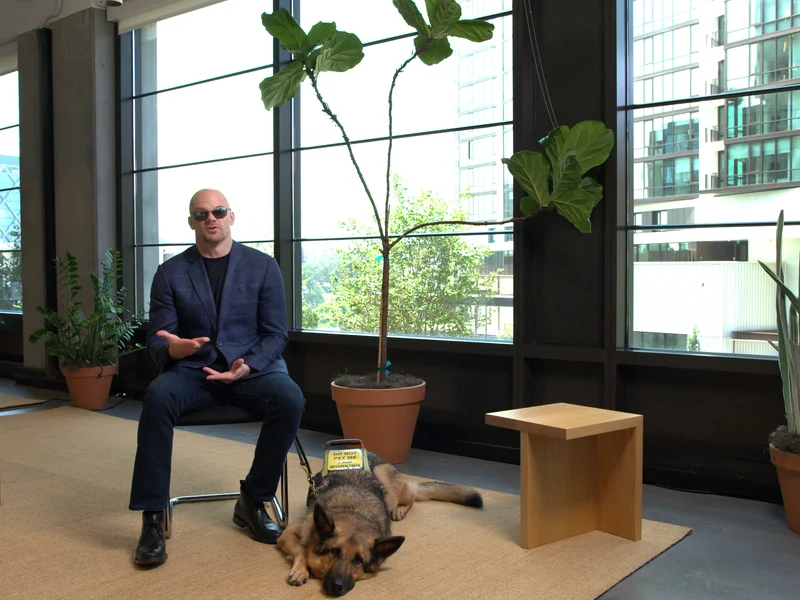
Then at 21, my eyesight went out completely. And the discomfort that had been a background condition became the entire operating environment. I mourned the death of my imagined future self. Then I walked into university classrooms, job interviews, and billion-dollar boardrooms with a German Shepherd guide dog and nothing else but grit. I traveled domestically and internationally—blind —with a guide and a determination to refuse the comfortable option of staying home. I navigated every life essential—dating, parenting, managing a household, maintaining relationships—without the comfort of sight.

And here’s what decades of that conditioning produced: a person who is wired to seek discomfort, not avoid it. I learned to downhill ski at 38. I started training in Brazilian Jiu-Jitsu at nearly 46. I reinvented myself at every turn—not because I’m brave, but because discomfort had become my operating system. I’d been conditioned by a lifetime of it to recognize that the most productive thing I could do was move toward the hard thing, not away from it.

This pillar gives your team a structured diagnostic for identifying the comfort patterns that are stalling their performance—and a method for introducing productive discomfort without reckless disruption. The organizations that systematically seek discomfort are the organizations that innovate. The ones that seek comfort are the ones that plateau.

Research context: Research on deliberate practice shows that performance improvement occurs at the edge of current ability—the zone of productive discomfort. Teams that remain in their comfort zone maintain existing performance but do not develop new capabilities. The conditioning effect is well-documented: repeated exposure to manageable discomfort builds adaptive capacity over time.

This pillar is delivered at two levels.

For broad audiences: the Comfort Kills™ keynote — a deeper-dive 45-90 minute keynote built around the lifelong conditioning arc and the anti-complacency business thesis. The keynote opens the conversation across an entire organization.

For executive cohorts: the Kill the Comfort™ Strategic Facilitation Exercise — a facilitated session (as short as 45 minutes, scaled to event goals) where leadership teams surface their own organizational blind spots, identify the comfort patterns limiting future-state performance, and build alignment around the strategic shifts required to change them. The facilitation operationalizes the thesis at the leadership-team level.

Most organizations driving enterprise-wide transformation book both: the keynote to introduce the thesis to the broader audience, the facilitation to confront it inside the leadership team.
05 Take Advantage of Your Disadvantages

Every team, every organization, and every individual has disadvantages. The question isn’t whether you have them. The question is whether you’re using them.

Most teams treat disadvantages as obstacles to manage—things to work around, compensate for, or minimize. This pillar teaches the opposite: your disadvantages contain information and capabilities that your advantages cannot provide. The teams that learn to extract value from their disadvantages don’t just overcome them. They build competitive advantages that teams without those disadvantages cannot replicate.

Going blind was the ultimate disadvantage. But it gave me capabilities I never would have developed with sight. I listen more carefully than anyone in the room because I can’t read the body language—so I hear what people actually mean, not just what they say. I prepare more thoroughly than any competitor because I can’t wing it—every deal, every presentation, every negotiation is planned at a level of detail that sighted executives rarely match.

I built software without seeing the screen, which forced me to think about architecture at a level of abstraction that produced solutions Oracle said were impossible. The software skills my blindness forced me to build became the foundation for managing multi-billion-dollar technology deals. I became so proficient at managing our spreadsheet system, I automated a great deal of our work using custom-written Visual Basic code that saved countless hours for our entire global department. And, I was a better business professional because I understood our technology solutions at a depth that sighted executives never needed to develop.

None of those capabilities would exist if I had kept my sight. My disadvantage became my competitive advantage—not by accident, but by systematic extraction.

Your team has disadvantages right now that they’re trying to overcome. A smaller budget than the competitor. A later market entry. A less recognizable brand. Fewer resources. This pillar gives them a structured method for flipping those disadvantages: identifying the unique information, capability, or perspective that the disadvantage provides and building it into a competitive position that well-resourced competitors cannot replicate—precisely because they’ve never had to develop it.

Research context: The concept of “constraint-driven innovation” is well-documented in organizational research. Teams operating under constraints consistently produce more creative solutions than teams with unlimited resources. This pillar operationalizes that principle—turning disadvantage from something to overcome into something to leverage.

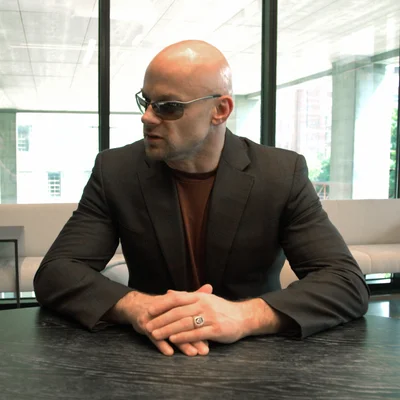
Chad E. Foster in a strategic meeting

How the Framework Was Built

The Blind Ambition Framework was not designed in a classroom, a consulting firm, or a research lab. It was built under the most extreme conditions of uncertainty imaginable—and then proven in billion-dollar enterprise business.

At 21, Chad E. Foster lost his eyesight. The world he had navigated for two decades disappeared. Every system he relied on—for learning, working, communicating, competing—became obsolete overnight. There was no playbook for what came next.

What Foster built from that experience was not a motivational story. It was a methodology. A structured set of principles for performing when the path forward is not visible—when the systems you relied on no longer work, when the information you need isn’t available, when the conditions demand that you build something new with no guarantee it will succeed.

That methodology was then tested at the highest levels of enterprise business:

  • Harvard Business School’s executive leadership program—where Foster became the first blind executive to graduate
  • The technology industry—where Foster generated $45 billion in technology deals and helped drive the $34 billion acquisition that reshaped the open-source industry
  • Oracle—whose engineers said the CRM software Foster built was impossible to create
  • Fortune 500 stages worldwide—where the framework has been delivered 200+ times to 175,000+ attendees across 6 continents

The framework works for your team, not because blindness is inspiring. It works because the methodology built from it was tested under conditions that most business leaders will never face—which means it is overengineered for the conditions your team actually encounters. If the framework performs when you can’t see the path at all, it performs when you can’t see the path clearly.

The Atlanta Opera commissioned an opera based on Foster’s life—a testament to the extraordinary nature of the experience that produced the framework. But the framework itself is not extraordinary. It is structured, repeatable, and applicable to any team facing pressure, disruption, or uncertainty. That’s by design.

Where the Framework Is Applied

The Blind Ambition Framework has been applied across industries, audiences, and business challenges. The 5 pillars are universal. The application is tailored to each audience's specific context.

  • By Format

    The framework is delivered through five programs across two engagement formats, plus LeaderPass for sustained reinforcement:

    • Keynotes (45–90 minutes, audiences of 50–5,000+) The full framework delivered through storytelling, humor, and a structured methodology your audience applies on Monday morning. Three keynote programs: Blind Ambition™ (flagship), Comfort Kills™, and Diversity (with its own dedicated 5-pillar framework).

      See All Programs
    • Kill the Comfort™ Strategic Facilitation Exercise (as short as 45 minutes, cohorts of 20–200) Surfaces organizational blind spots and builds leadership alignment around what must change. Facilitated session for executive teams navigating disruption, transformation, or strategic inflection points. Requires a preceding Blind Ambition™ keynote.

      Learn About Kill the Comfort™
    • Uncertain Advantage™ Strategic Activation Intensive (as short as 45 minutes, cohorts of 20–200) Applies the framework pillars to a specific organizational challenge through facilitated executive practice. Includes one year of LeaderPass access for all participants. Requires a preceding Blind Ambition™ keynote.

      Learn About the Strategic Activation Intensive
    • LeaderPass Behavior Change Program (30+ lessons, 1 year) A self-paced digital course that reinforces the framework after the keynote or Intensive. Includes video lessons, workbooks, and practical exercises. Enterprise licensing available for groups of 10 to 1,000+.

      Learn About LeaderPass
    • Compare all programs
200+ events. 175,000+ attendees. 6 continents.

Results From the Framework

  • Sales Performance

    "Post keynote, we had a very good Q1… over 40% in YoY growth… like nothing I have ever seen from a guest speaker at a sales conference."

    — CRO, Illumio

  • Audience Engagement

    "In an auditorium of over 4,000 people, we could have heard a pin drop. The way Chad laid out his story kept the audience engaged until the last word. Chad was an absolute home run for our Annual Meeting."

    — ASAE

  • Executive Impact

    "At least 10 people came up to me and said he was the best they have ever seen present, including my boss. An absolutely incredible session."

    — ADP

  • Behavior Change

    "Made me inspired… empowered me to coach, train, and develop others to reach their potential."

    — Event Attendee

  • Workshop Depth

    "Chad Foster's message goes far beyond simply checking the 'Keynote Speaker' box on your planning list. Following up his keynote with his workshop brought out some very clear, new, and obvious connections."

    — President & CEO, IFEA World

  • Cultural Transformation

    "Highly recommend Chad if you are looking to build a team that thrives in change!"

    — Salesforce

Chad E. Foster with his dog

About the Creator

Chad E. Foster is a keynote speaker, business methodology expert, and the creator of the Blind Ambition Framework™. He is a graduate of Harvard Business School’s executive leadership program, a former finance and sales executive at IBM and Red Hat, and the author of Blind Ambition, published by HarperCollins Leadership. After losing his eyesight at 21, Foster built a career that includes $45 billion in enterprise technology deals, CRM software that Oracle said was impossible, and the leadership role in the organizational integration following IBM’s $34 billion acquisition of Red Hat. He has shared the stage with Adam Grant and Daymond John, and his life story was commissioned as an opera by the Atlanta Opera. Foster has delivered the Blind Ambition Framework through 200+ events to 175,000+ attendees across 6 continents. He is a black diamond skier and Brazilian Jiu-Jitsu practitioner—both without eyesight. He resides in Atlanta, Georgia, and is represented by Executive Speakers Bureau.

Comfort Kills™ — The Framework's Core Insight

The fourth pillar of the Blind Ambition Framework—Don’t Let Comfort Kill Your Growth—contains the framework’s most provocative insight: comfort, not adversity, is the greatest threat to organizational performance.

Most organizations prepare for adversity. They build contingency plans, run scenario exercises, and develop crisis protocols. But no organization prepares for comfort. And that’s where the real damage happens—in the slow, invisible erosion of ambition, innovation, and competitive hunger that occurs when a team gets comfortable with its current performance.

The organizations most at risk of underperformance in the next decade will not be the ones that faced the hardest challenges. They will be the ones that faced the fewest—and got comfortable enough to stop growing.

Learn About the Comfort Kills™ Program

Frequently Asked Questions About the Blind Ambition Framework™

01 What is the Blind Ambition Framework?

The Blind Ambition Framework is a 5-step business methodology created by Chad E. Foster for building breakthrough performance under pressure. Its five pillars —Own Your Response, Tell Yourself the Right Stories, Visualize Your Greatness, Don’t Let Comfort Kill Your Growth, and Take Advantage of Your Disadvantages—provide a structured, repeatable system that has been applied at organizations including Google, Salesforce, Caterpillar, Blue Cross Blue Shield, and IBM across 200+ events and 6 continents.

02 How was the framework developed?

The framework was developed from Chad Foster’s experience of going blind at 21 and subsequently building a career that includes a Harvard Business School degree, $45 billion in enterprise technology deals, and developing software that Oracle said was impossible. The methodology was extracted from the principles Foster used to perform under conditions of total uncertainty and was then validated through application at Fortune 500 organizations worldwide.

03 How is the framework delivered?

Five programs across two engagement formats — keynote presentations and facilitated executive intensives — plus the LeaderPass Behavior Change Program for sustained reinforcement.

Keynote programs (45–90 minutes for audiences of 50 to 5,000+): Blind Ambition™ (flagship), Comfort Kills™, and Diversity (with its own dedicated 5-pillar framework).

Executive facilitation programs (for cohorts of 20 to 200): Kill the Comfort™ Strategic Facilitation Exercise — surfaces blind spots and builds alignment. Uncertain Advantage™ Strategic Activation Intensive — applies the framework pillars to a real organizational challenge through facilitated executive practice. Both require a preceding Blind Ambition™ keynote.

LeaderPass Behavior Change Program — 30+ lesson digital course aligned to the framework pillars. Included with Uncertain Advantage™. Available as an add-on for the other four programs.

For organizations driving enterprise-wide change, the three-stage transformation arc sequences Blind Ambition™ (keynote) → Kill the Comfort™ (facilitation) → Uncertain Advantage™ (Intensive).

04 What results has the framework produced?

After one keynote, a client’s sales team reported 40% year-over-year revenue growth. The framework has been delivered 200+ times to 175,000+ attendees across 6 continents at organizations including Google, Salesforce, Fidelity, IBM, ADP, and Blue Cross Blue Shield. Intensive participants report applying the framework to active business challenges and building measurable action plans during the session.

05 What topics can the framework be applied to?

The framework has been applied to sales performance, leadership development, change management, AI transformation, diversity and inclusion, innovation, and organizational resilience. Each topic application uses the same 5-pillar system with customized examples and emphasis tailored to the specific challenge. The diversity program delivers its own dedicated 5-pillar framework purpose-built for the diversity and inclusion context.

06 What is the Comfort Kills thesis?

The Comfort Kills thesis is the framework’s core insight, drawn from the fourth pillar (Don’t Let Comfort Kill Your Growth). It argues that comfort — not adversity — is the greatest threat to organizational performance. Developed from Foster’s lifelong conditioning through discomfort — from childhood through his current practice of seeking increasingly challenging experiences — the thesis provides a diagnostic for identifying and eliminating organizational complacency.

The thesis is delivered at two levels. For broad audiences: the Comfort Kills™ keynote (45–90 minutes, 50–5,000+) opens the anti-complacency conversation across the organization. For executive cohorts: the Kill the Comfort™ Strategic Facilitation Exercise (as short as 45 minutes, 20–200 participants) surfaces the specific comfort patterns and blind spots limiting the organization’s future-state performance and builds alignment around the strategic shifts required to change them. Most organizations driving transformation book both.

07 How is the Blind Ambition Framework different from motivational speaking?

The framework is a structured, 5-step business methodology with named pillars, research backing, and measurable application. It is not a motivational speech. Teams that apply the framework receive tools they can implement immediately - not inspiration that fades by Wednesday. The 40% revenue growth result, the 200+ delivery track record, and the Fortune 500 client list reflect methodology-driven outcomes, not motivational energy.

08 How do I book Chad Foster to deliver the framework?

Contact Brandy Gibson at Executive Speakers Bureau at 855-GET-CHAD (855-438-2423) or submit event details through any program page on this site. Include your event date, audience size, industry, and objectives for the fastest response.

Chad E. Foster in a strategic meeting

Apply the Framework to Your Organization

200+ events. 175,000+ attendees. 6 continents.

The Blind Ambition Framework™ has been delivered 200+ times across 6 continents. It has driven 40% revenue growth, pin-drop silence in auditoriums of 4,000, and Monday- morning behavior change for teams at the world’s most demanding organizations.

Choose the format that fits your event:

Compare All Programs

Inquire about speaking

To inquire about speaking, call 855-GET-CHAD and press Option 1 to connect with Brandy Gibson at Executive Speakers Bureau.